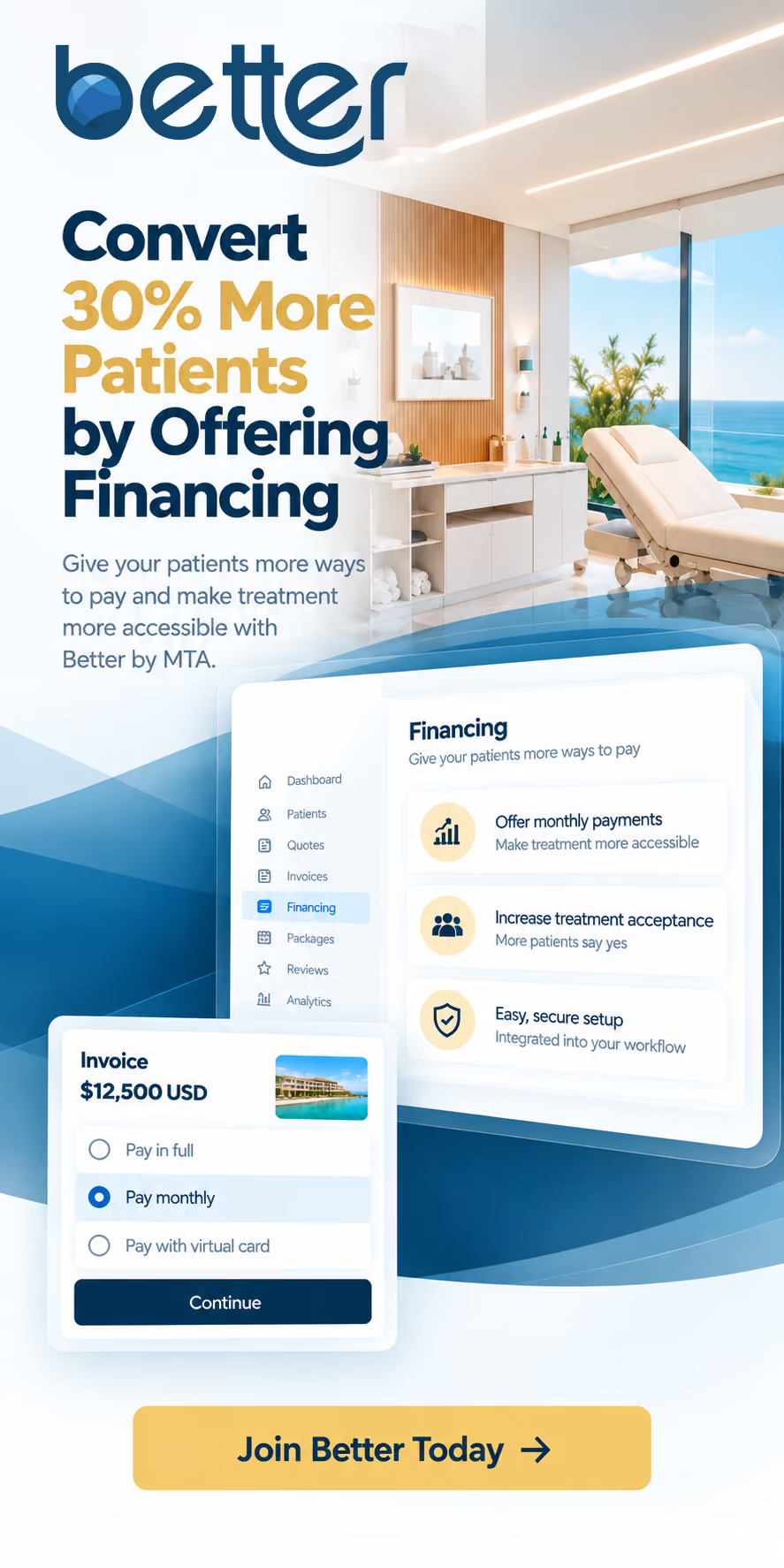

Financing medical treatment abroad with no down payment is possible for some applicants, but it is never a given, because whether any money is required up front is decided by an independent finance company, not by us. Better by MTA is not a lender, bank, broker, or insurer. We help patients compare accredited providers abroad and request written prices, and where financing is available it is offered by independent third-party finance companies that make their own decisions about rates, terms, and whether a down payment is needed. So the honest answer to "can I finance treatment abroad with little or nothing down" is: sometimes yes, sometimes no, and it depends on you, the amount, and the specific finance company you apply to.
This article walks through what is realistic, how the process actually works, and what to check before you count on a no-money-down plan. The goal is to help you plan with clear eyes rather than to sell you on a payment that may not materialize.
How financing medical treatment abroad with no down payment actually works
The sequence matters, because the financing step comes after you know the real number, not before. Here is the order that keeps you out of trouble.
- Get a written price from a specific accredited provider. Not a brochure range, not an average you read online, but an itemized quote for your situation from a named hospital or clinic.
- Apply directly to an independent finance company. You, the applicant, submit the application. The finance company reviews your information and decides whether to approve you, at what rate, over what term, and with how much (if anything) due up front.
- If approved and you accept the terms, you arrange travel, receive care, and then repay the finance company over the agreed schedule.
Notice where the down payment question lives: entirely inside step two, with the finance company. We do not set it, waive it, or promise it. Some plans are structured to require nothing down. Others ask for a deposit or first payment before funds are released. The same applicant can see different requirements from different companies for the same amount. That variability is normal, and it is why we avoid quoting you a number we cannot stand behind.
What little-or-no-down-payment financing realistically costs
Because this article is about general financing rather than a single procedure, the useful thing to understand is not one price but the shape of the cost. Treatment abroad is typically priced as a package, and a package usually covers the core clinical service: the surgeon or physician fees, the facility, standard anesthesia, and routine in-stay care. Packages commonly do not cover your flights, your lodging, local transport, extended recovery time, long-term follow-up once you are home, or the cost of managing a complication. Only a written quote from a specific provider tells you what is and is not included, so treat every figure here as general information, not a price.
On the financing side, the piece most people miss is the trade-off hidden in "no money down." Financing a larger share of the cost, which is what putting little or nothing down means, generally increases the total amount you repay over the life of the plan, because you are borrowing more and usually paying interest on that larger balance for longer. A smaller monthly payment can feel easier while quietly costing more in total.
Here is an illustrative example, and please read it as an illustration only. Imagine a treatment package in the mid single-digit thousands of US dollars, financed in full with nothing down, at a moderate illustrative annual percentage rate, with no fees, over a couple of years. The monthly payment would land somewhere in the low hundreds of US dollars, and the total of all those payments would come to meaningfully more than the original package price because of the interest added over time. If instead you paid a portion up front and financed less, the monthly figure might be similar or lower, but the total you repay would typically be smaller. This example assumes the full amount financed at an illustrative rate with no fees; it is not a quote, an offer of credit, or a pre-approval, and the real numbers are set by the finance company after its review.
Eligibility, approval, and what actually drives a low or no down payment
Approval and terms, including whether you owe anything up front, come down to the finance company's assessment of the application. Stronger credit and a steadier financial picture generally improve your odds of little or no down payment and a lower rate, but nothing is guaranteed, and many applicants will not receive the lowest advertised terms. Being realistic here protects you: plan as if a down payment might be required, and treat a no-money-down approval as a welcome outcome rather than the assumption your whole trip rests on.
Before you rely on any offer, read the finance company's own disclosures and look past the monthly payment to the full picture:
- APR versus interest rate. The annual percentage rate reflects the yearly cost of borrowing more completely than a quoted interest rate alone, so compare offers on APR.
- Fees. Ask specifically about origination fees, late fees, returned-payment fees, and any prepayment penalty that would charge you for paying the balance off early.
- The total of payments. Add up every scheduled payment for the whole term, not just the monthly figure, so you see the real cost of financing a larger share.
- The fine print on "no down payment." Confirm in writing that nothing is due up front, rather than assuming it, and check whether a promotional rate later resets to a higher one.
If you want to see written prices from matched accredited hospitals and learn which independent finance companies work with a given provider, you can request information from a Better by MTA coordinator at no cost. That request is not a credit application and does not affect your credit score.
What to watch for when a plan promises little or nothing down
A no-money-down headline can be genuine, or it can be bait. A few habits keep you on solid ground:
- Finance a written price, not a range. Decide how much you need based on an itemized quote for your situation, not an estimate.
- Budget for everything the package does not cover: flights, lodging, local transport, follow-up care at home, and a cushion for the unexpected.
- Be wary of anyone who guarantees approval, quotes you a specific rate before you have actually applied, or pressures you to book travel before your financing is confirmed in writing.
- Keep the medical decision separate from the financing decision. Choose the right provider and the right care first; decide how to pay second. A tempting payment plan is not a reason to pick a clinic.
The next step: inquire, do not apply for a loan
When you are ready, the practical next move is simply to inquire. Requesting information is free, carries no obligation, and is not a credit application, so it will not touch your credit score. It is how you get real written prices from matched accredited hospitals and see which independent finance companies work with that provider, so you can weigh a realistic down payment picture against the total cost before you commit to anything. To get started, you can inquire about written prices and financing options and let a coordinator help you line up the pieces in the right order.
Frequently asked questions about no-down-payment medical financing abroad
Can I really finance treatment abroad with nothing down?
Sometimes. Some plans from independent finance companies are structured to require no money up front, while others ask for a deposit or first payment. The requirement is set by the finance company based on your application and the amount, not by Better by MTA, and approval is never guaranteed.
Does a bigger down payment lower what I pay overall?
Generally yes. Putting more down means financing less, which usually reduces the total of all your payments because you pay interest on a smaller balance for less time. Financing a larger share, which is what little or no money down means, tends to raise the total you repay even when the monthly figure looks comfortable.
Will asking Better by MTA for information affect my credit?
No. Requesting information from us is not a credit application and does not affect your credit score. It is how you get written prices and learn which independent finance companies work with a provider. Any actual credit application happens later, directly with the finance company, if you choose to proceed.
What improves my chances of little or no down payment?
Stronger credit and a steadier financial picture generally improve your odds of a low or no down payment and a better rate, but nothing is guaranteed and many applicants will not get the lowest advertised terms. It is wise to plan as though a down payment may be required.
Who sets the rate, term, and down payment?
The independent finance company does, after its own review. Better by MTA is not a lender, bank, broker, or insurer, and does not set or guarantee any rate, term, fee, or approval. Any figures you see from us are illustrations for general information, not quotes or offers of credit.
Better by MTA helps you compare verified providers, request quotes, and coordinate care with confidence, powered by Mastercard payment infrastructure and compliant with HIPAA, GDPR, and SOC 2 standards, so your information and payments are handled securely from first inquiry to follow-up.
By Jonathan Edelheit, CEO and Co-Founder, Medical Tourism Association. Last updated October 2026.